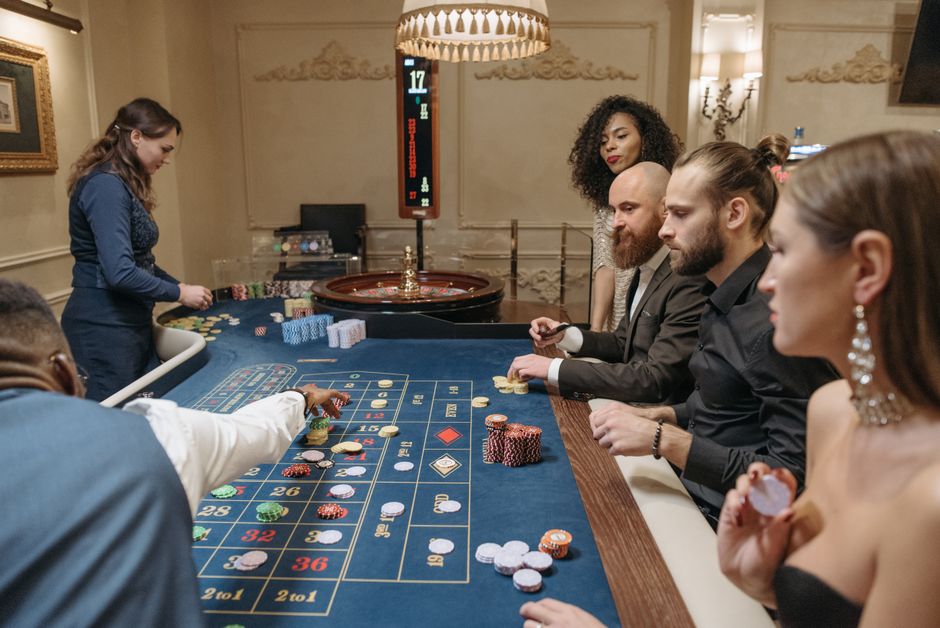
Every gambler has heard the phrase "the house always wins." It's true, technically. But it's also wildly misleading. The house doesn't win because it's lucky or because the games are rigged. It wins because of a small, measurable edge baked into every bet you place. And once you understand that edge, the entire iGaming landscape starts to look different — less like a casino floor and more like a math problem you can actually navigate.
This isn't a lecture about quitting gambling. Far from it. This is about playing smarter, knowing what you're up against, and making decisions that give you the best possible shot. Let's break down what's actually happening when you click "spin," call a raise, or place a parlay.
Slot machines, roulette wheels, and blackjack tables all have a built-in mathematical advantage for the operator. This is called the house edge, and it's not hidden. Regulators publish it. Game designers calculate it. You can look it up. mahjong ways 2 covers this in more detail.
Here's a quick rundown of typical edges across popular games:
Notice anything? The gap between American and European roulette is enormous for what looks like a tiny difference. That single zero changes everything. If you're playing roulette in Vegas on a double-zero wheel, you're handing the house more than double the edge you'd face on a European wheel. Same game, same bet, radically different math.
Slots are the most popular casino game on the planet, and also the least understood. Two numbers matter more than anything else: RTP (return to player) and volatility.
RTP is the percentage of all wagered money that gets returned to players over millions of spins. A 96% RTP slot returns $96 for every $100 wagered — on average, over time. Online slots typically sit between 94% and 97%. Land-based machines are often lower, sometimes 85% to 92%.
Volatility is different. It describes how those returns are distributed. Low-volatility slots pay small amounts frequently. High-volatility slots pay rarely but can hit massive multipliers. Neither is "better" — they suit different bankrolls and personalities.
Here's what most players miss: a 96% RTP doesn't mean you'll lose 4% each session. It means the game is designed to keep 4% over an infinite number of spins. In a short session, variance dominates. You could double your money on a 92% RTP machine and lose everything on a 97% one. RTP controls the long game, not your Tuesday night.
Practical tip: choose slots with RTP above 96% when you can. Many providers list it in the game info panel. If a slot doesn't disclose RTP, that's a red flag.
Here's the beautiful thing about poker: you're not playing against the house. You're playing against other people. The house takes a rake — typically 5% of each pot up to a cap — and then steps out of the way.
That means a skilled poker player can achieve a positive expected value (+EV). Unlike slots or roulette, where the math is fixed against you, poker rewards skill, psychology, and discipline. The edge comes from:
The rake is the silent killer in low-stakes games. In a $1/$2 cash game with a 10% rake capped at $5, the house is effectively taking a massive chunk of every pot. This is why higher-stakes games are often more profitable for skilled players — the rake becomes proportionally smaller.
Sports betting is a different beast entirely. The bookmaker sets odds based on probability, public perception, and their own risk management. Your job is to find spots where the odds are mispriced in your favor.
That's called finding value. A bet has value when the true probability of an outcome is higher than the implied probability in the odds. If you think a team has a 55% chance to win, and the odds imply 50%, that's a value bet — even if you lose that specific wager.
This is where sharp bettors separate themselves. They're not picking winners. They're picking mispriced lines. They track closing lines, line movement, and public betting percentages. They know that beating the closing line consistently is the strongest predictor of long-term profitability.
Common mistakes among recreational bettors:
That vig point is huge. Most casual bettors think 50% is break-even. It's not. At -110, you need 52.38%. Those two extra percentage points are the difference between a winning and losing bettor over thousands of wagers.
You can know every statistic, every RTP, every odds calculation — and still go broke if you don't manage your money properly. Bankroll management is the unglamorous foundation of every successful gambler.
The principles are simple but brutal to follow:
A $1,000 bankroll with $50 spins isn't a strategy — it's a countdown. Twenty spins and you're done. Even a generous 97% RTP slot can wipe that out in minutes due to pure variance. But 20 spins at $5 each gives you 200 spins — enough to actually experience the game's designed return curve.
Here's the uncomfortable truth that ties all of this together: in casino games, you're fighting a mathematical war you cannot win. The house edge ensures that over enough spins, hands, or rolls, the operator profits. Your only real weapons are game selection, bankroll discipline, and knowing when to walk away.
Poker and sports betting offer something different — a chance to be the house yourself, to have a genuine edge if you're willing to put in the work. But that edge is thin, fragile, and easily destroyed by ego.
The players who last aren't the ones chasing jackpots or gut feelings. They're the ones who treat iGaming like a cost of entertainment and occasionally, with skill and patience, turn it into something more. Know the math. Respect the variance. Play the long game. That's the only strategy the house can't take from you.

Rain in Brighton is no washout. A local's guide to the best cafés, markets, museums, shops and cinemas for a wet day trip.

Interval, matinee, understudy, front of house: a plain-English guide to the words you'll meet on a British theatre...

Yoga, Pilates and strength training each ask something different of a beginner. Here's what happens in each class,...

Fresh breezes of culture and ideas..
